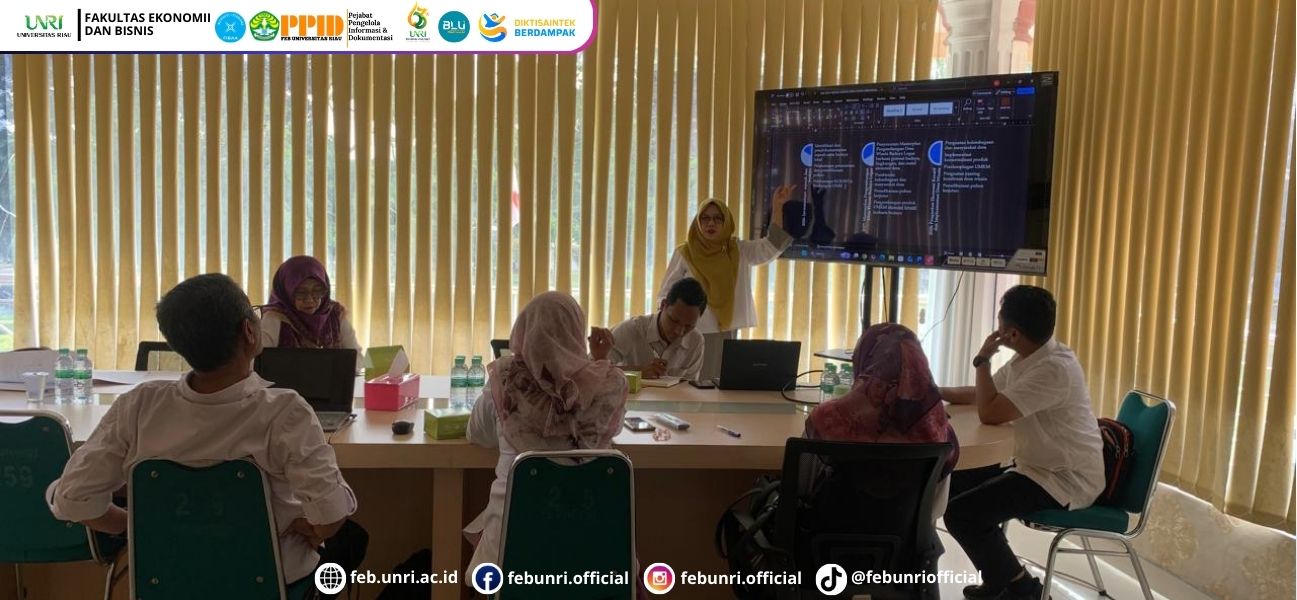
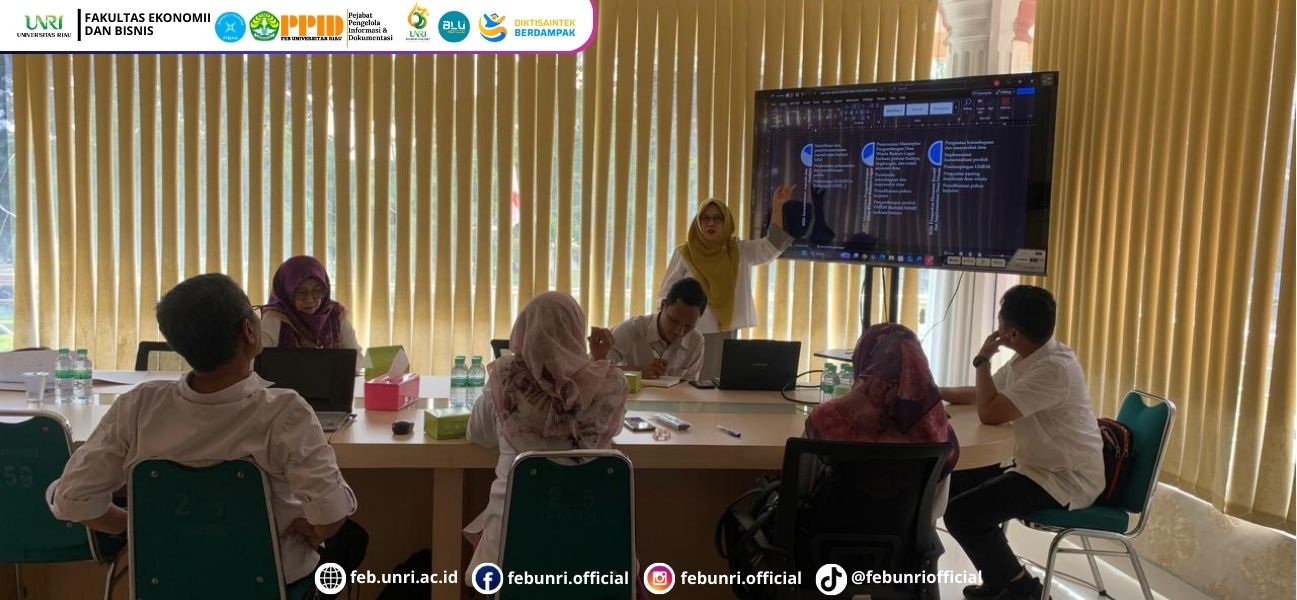
Pekanbaru, January 5, 2026 — The Faculty of Economics and Business, University of Riau (FEB UNRI), held a coordination meeting to align the development roadmap for Logas Assisted Village toward becoming a Sustainable Cultural Tourism Village for the 2026–2028 period. This activity marked an initial step in refining policy directions and programs in the first year of the roadmap, which focuses on social, cultural, and historical inventory as the foundation for strengthening the village economy.
The meeting was attended by the Dean of the Faculty of Economics and Business, University of Riau, Dr. Hj. Alvi Furwanti Alwie, S.E., M.M.; the Head of the Department of Economics, Dr. Yusni Maulida, S.E., M.Si.; the Head of the Logas Assisted Village Development Roadmap, Dr. Eka Armas Pailis, S.E., M.Si.; as well as FEB UNRI lecturers Dr. Drs. Hendro Ekwarso, M.Si., Rahmita Budiartiningsih, S.E., M.Hum., Arif Zulkarnaen, S.E., M.E., and Cut Endang Kurniasih, S.E., M.Si.
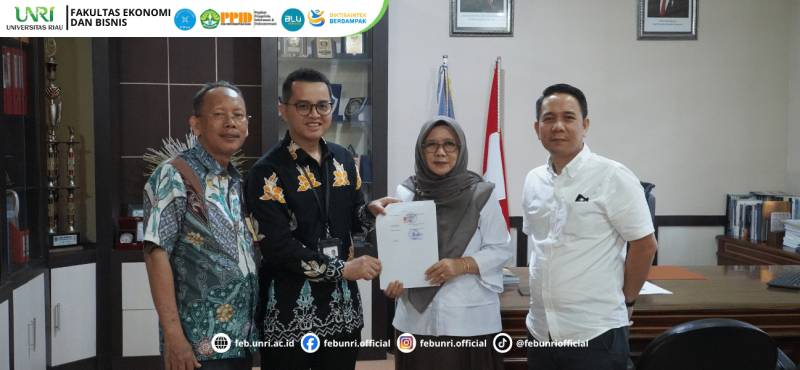
During the meeting, it was agreed that the first year of the roadmap would focus on the drafting and signing of a Memorandum of Agreement (MoA) as a framework for collaboration in research and community service, aligned with the lecturers’ areas of expertise. Research activities will be directed toward the identification and documentation of the social, cultural, and historical potential of Logas Village as a foundation for strengthening the local economy, with the involvement of creative economy experts to support the achievement of the roadmap’s targets.
In addition to research, community service programs are designed with a focus on enhancing environmental resilience. Planned activities include tree planting and maintenance, assistance for community economic activities such as traditional gold panning, as well as other programs relevant to the needs and characteristics of Logas Village.
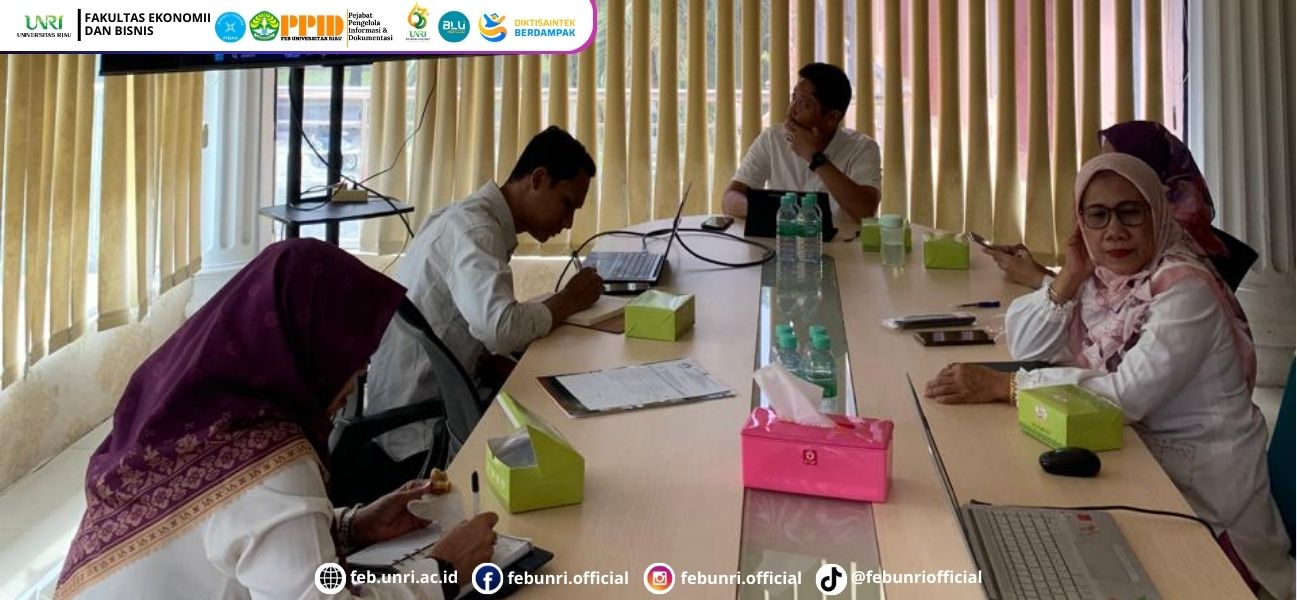
The meeting also discussed preparations for the implementation of UNRI’s Impact-Oriented Community Service Program (Kukerta Berdampak), scheduled for June–July 2026. Technical arrangements will be prepared promptly to determine the number of FEB UNRI students and field supervising lecturers, using an assisted-village scheme that allows more than three student groups to be actively involved. The allocation of activity coordinators was also established to ensure effective coordination and program implementation.
The Dean of the Faculty of Economics and Business, University of Riau, Dr. Hj. Alvi Furwanti Alwie, S.E., M.M., emphasized that this roadmap represents FEB UNRI’s commitment to providing sustained assistance to the village.
“The development of Logas Village must begin with a comprehensive understanding of its social, cultural, and historical potential. From that foundation, economic strengthening can be built gradually, involving lecturers and students, while continuing to safeguard environmental sustainability,” Dr. Alvi stated.
Through the alignment of this roadmap, FEB UNRI hopes that Logas Village will develop into a competitive cultural tourism village, grounded in local potential and delivering tangible long-term benefits to the community.