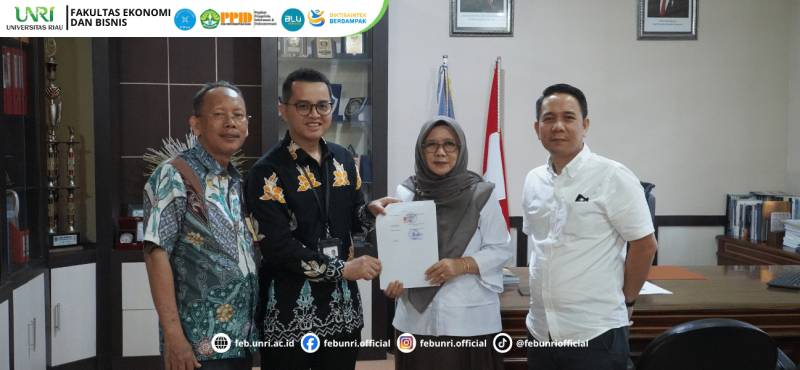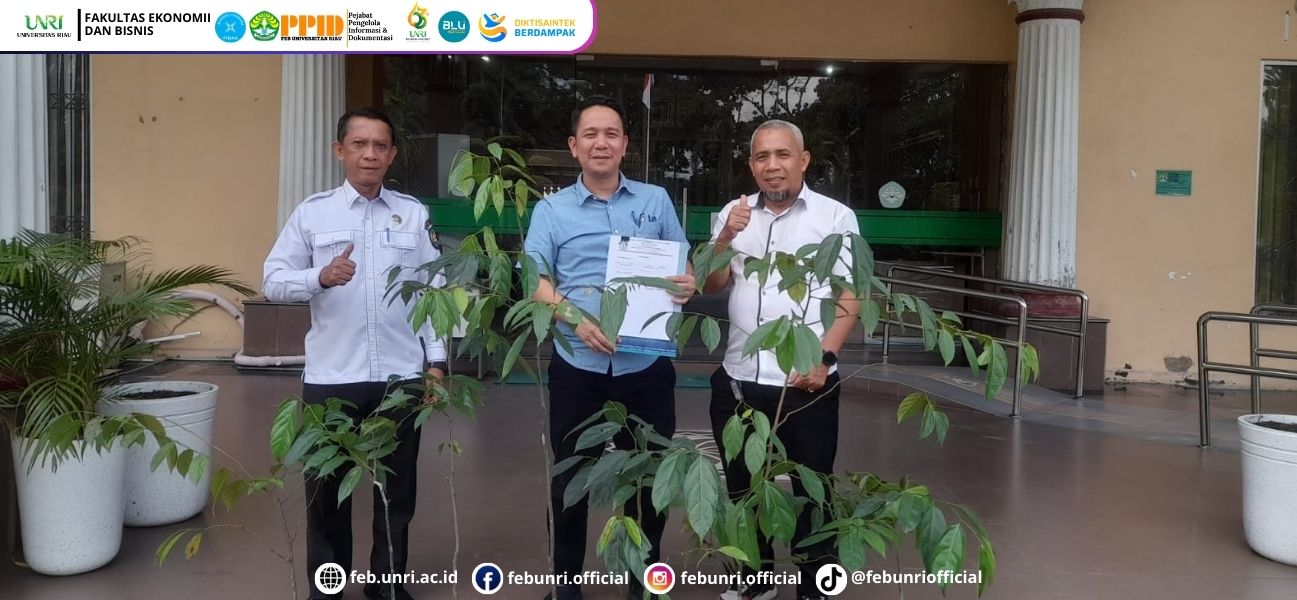
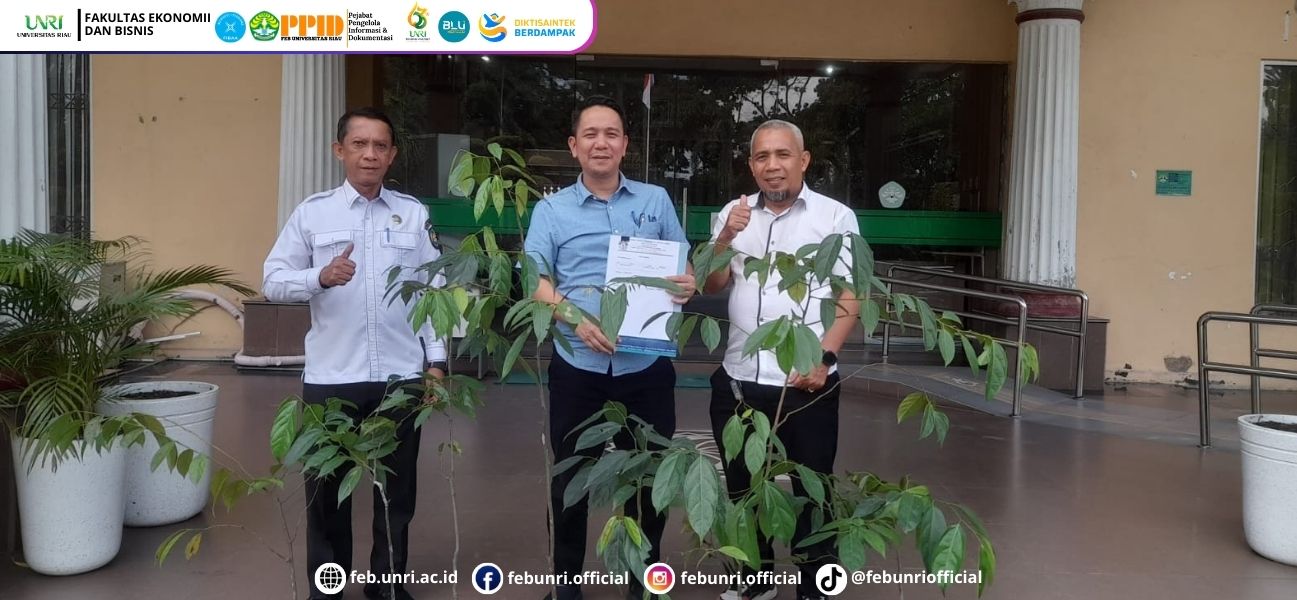
Pekanbaru, February 11, 2026 — The Faculty of Economics and Business at the University of Riau (FEB UNRI) has once again reinforced its commitment to environmental action and sustainable development through the collaboration of its Green Social Program and Tree Bank Program. This commitment is reflected in a tree seedling distribution initiative that has now entered its second day, marked by the handover of eight (8) Kulim tree seedlings to the Rokan Hulu Regency Office of Tourism and Culture (Rohul). The seedlings will be planted at several tourist destinations across Rohul.
This program also represents a concrete step toward strengthening the concept of ecotourism—destinations that are not only attractive, but also greener and more environmentally friendly.
The handover ceremony was attended by the Vice Dean for Student Affairs, Alumni, and Cooperation of FEB UNRI, who also serves as Head of the Tree Bank, Rendra Wasnury, S.E., M.IB, and the Head of the Rokan Hulu Regency Office of Tourism and Culture, H. Helfiskar, S.H., M.H. Both parties expressed their appreciation for the collaboration between the university and the local government, which is considered strategic in linking reforestation efforts with the enhancement of tourism destination quality.
The Dean of FEB UNRI, Dr. Hj. Alvi Furwanti Alwie, S.E., M.M., stated that the Tree Bank Program does not end with the handover of seedlings, but emphasizes sustainable impact. “We want this green initiative to be present in public spaces where the community can directly feel its benefits. Tourist destinations are the showcase of a region. When they become greener, their appeal increases, and their economic value grows responsibly,” said Dr. Alvi.
In the same vein, Rendra Wasnury, S.E., M.IB emphasized the importance of involving students, alumni, and partnership networks to ensure the program runs consistently. “The Tree Bank is a space for collaboration. We encourage the involvement of the academic community so that greening is not a one-time activity, but becomes a culture and a tangible contribution of FEB UNRI to the region, including through strengthening cross-sector partnerships,” he explained.
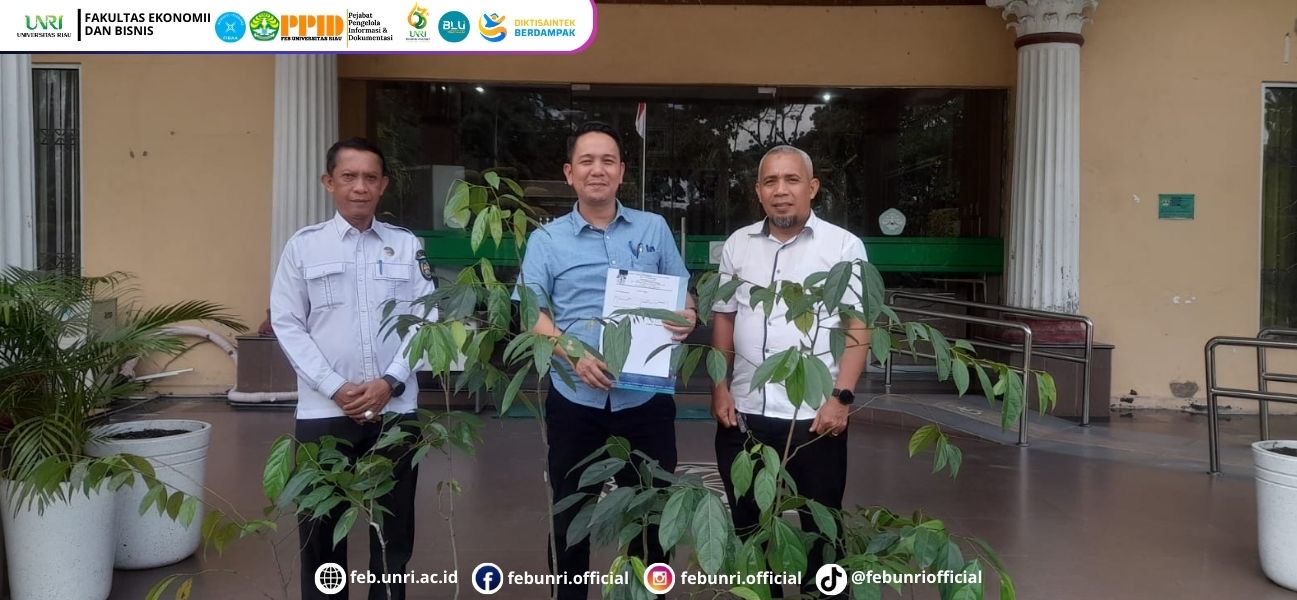
The selection of the Kulim tree was considered appropriate due to its ecological and economic value, as well as its status as a native species that deserves preservation. Planting these trees in tourism areas is expected to create shaded green spaces, strengthen the environmental identity of destinations, and support the conservation of local biodiversity, in line with the direction of sustainable tourism.
To ensure that the supply of seedlings and the planting process adhere to proper standards and are well maintained, the program has appointed the Regional Environmental and Forestry Agency (DLHK) and the Indragiri Rokan Watershed Management Agency (BPDAS Indragiri Rokan) as technical partners. DLHK also plays a role in providing on-site technical supervision, ranging from recommending suitable planting locations, offering maintenance education, to monitoring growth and strengthening community participation around the destinations. Meanwhile, BPDAS Indragiri Rokan contributes through land rehabilitation and conservation assistance, including plant species suitability, technical support to enhance vegetation cover, and program synergy for environmental restoration in areas relevant to the watershed landscape.
Through this collaborative scheme, FEB UNRI hopes that similar partnerships will continue to expand so that greening efforts can be sustained, generate tangible ecological impacts, and at the same time improve the quality and competitiveness of Rohul’s tourist destinations in a greener and more future-oriented manner.