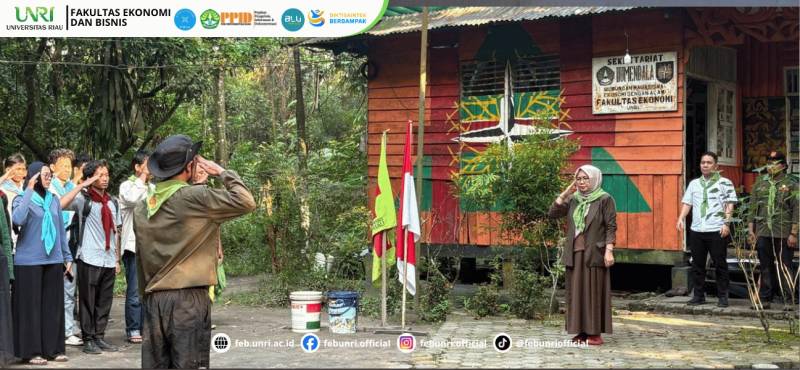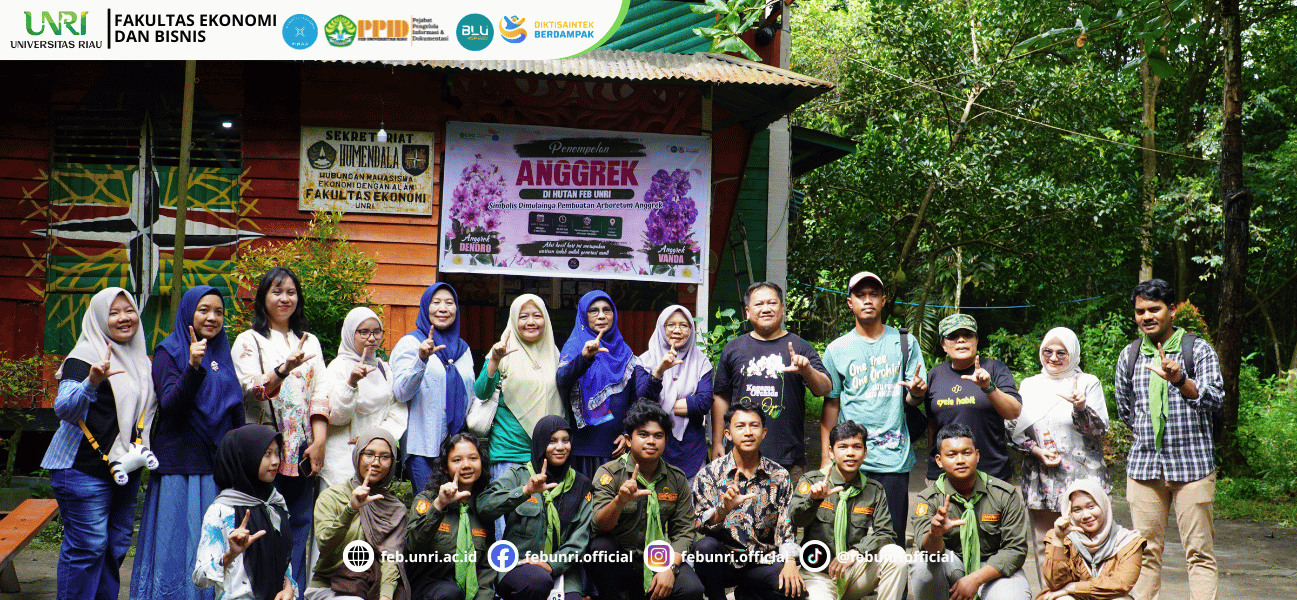
Pekanbaru, May 3, 2026 — In conjunction with the commemoration of Earth Day which falls on April 22, as well as being a symbol of the beginning of the creation of the Orchid Arboretum, FEB UNRI held an Orchid Attachment activity in the FEB UNRI Forest, Sunday (3/5) attended by the Dean of FEB UNRI Dr. Hj. Alvi Furwanti Alwie, S.E., M.M., Vice Dean for Student Affairs, Alumni and Cooperation of FEB UNRI, Rendra Wasnury, S.E., M.IB.; representatives of UP Tissue Culture Riskika Wulandari and Melissa Catherine; representatives of BPDAS Indragiri Rokan, Arif Adi Suhastyo; BEM UNRI, BEM FEB, Humendala, Media Center FEB, as well as representatives of lecturers and education staff. The event was hosted very well by host Denisa Nurmalia, S.T., M.I.Kom, lecturer in Communication Science FISIP UNRI.
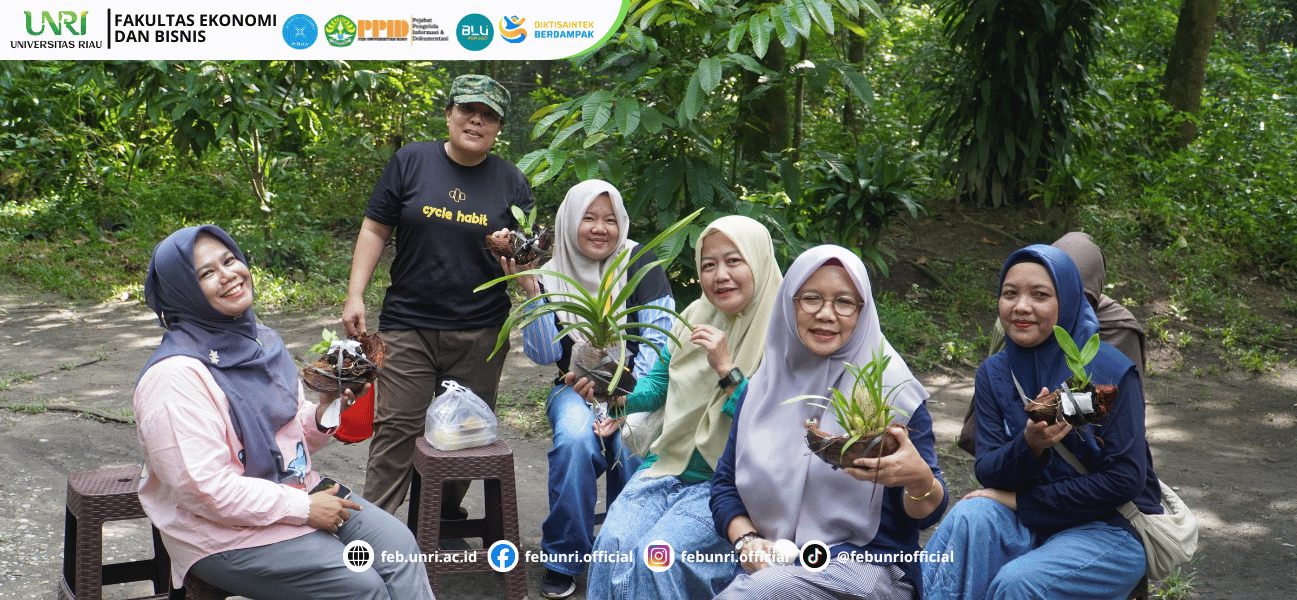
This step also affirms FEB UNRI's commitment to strengthening the Green Campus Program through concrete and sustainable actions. By selecting orchids, FEB UNRI aims to introduce a conservation touch that not only enriches the biodiversity of the FEB UNRI Forest but also provides a space for direct learning about the importance of maintaining the campus ecosystem.
The Orchid Arboretum is an area designed to collect, introduce, learn, and preserve various orchid species. With this concept, the FEB UNRI Forest is not only positioned as a tree-lined area but also directed as a living laboratory that can support educational activities, research, community service, and environmental education for the academic community.
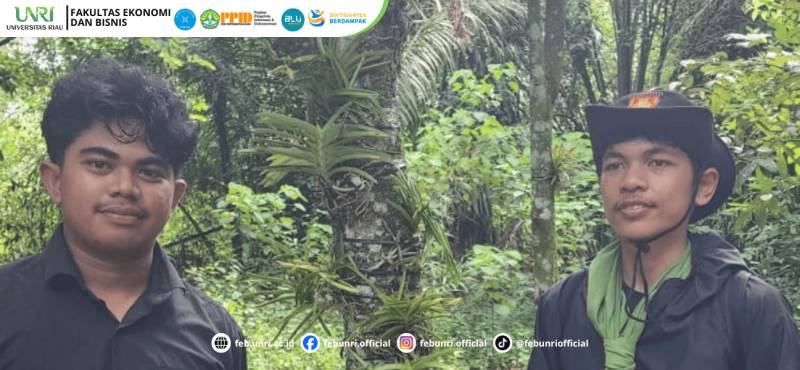
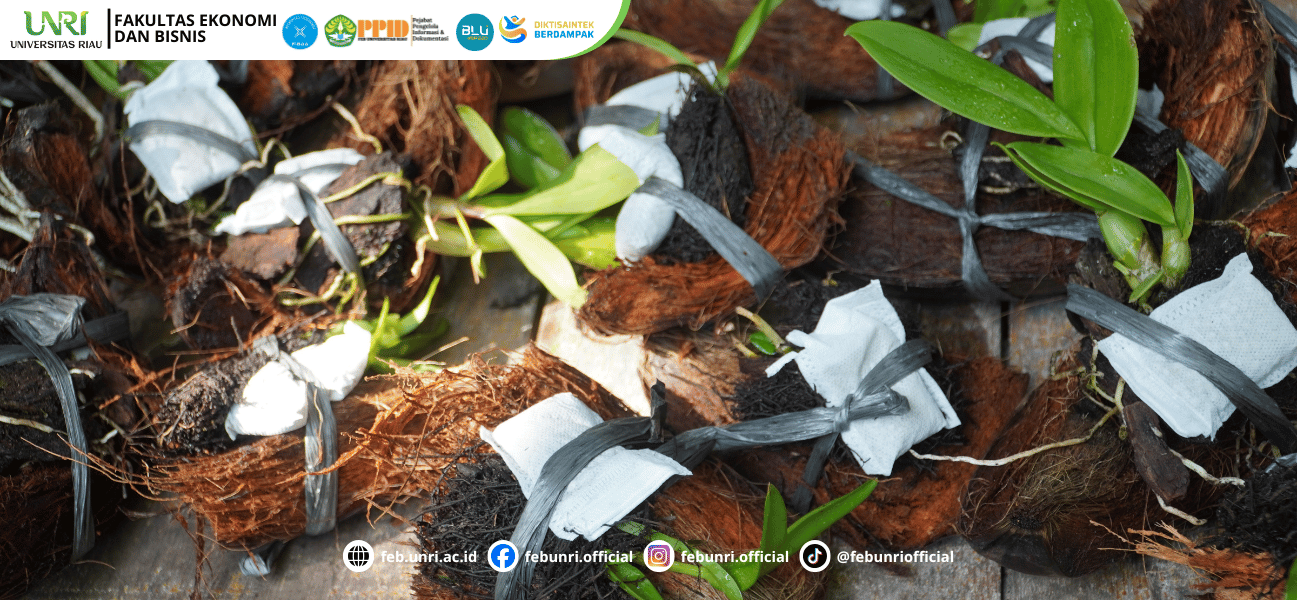
A total of 120 orchids are attached to trees in the FEB UNRI Forest area. The orchids used are Dendrobium and Vanda species. Both orchid species are known for their beautiful flower shapes and colors, so they are expected to add to the aesthetic value of the campus forest and serve as the initial collection for the development of the FEB UNRI Orchid Arboretum.
The Dean of FEB UNRI, Dr. Hj. In her remarks, Dr. Alvi Furwanti Alwie, S.E., M.M., expressed her gratitude to all partners in attendance and stated that today's event marked an important first step for the Faculty of Economics and Business (FEB) UNRI in developing the FEB Forest into a more valuable and sustainable area.
"The planting of these 120 orchids is a very meaningful first step for FEB UNRI. We want the FEB UNRI Forest to be not only a green space, but also a conservation, learning, and inspirational space for students, lecturers, educational staff, and the community. We started this Orchid Arboretum with small actions, but with great hopes for the future."
According to Dr. Alvi, the momentum of Earth Day serves as a reminder that environmental awareness needs to be demonstrated through concrete actions. Therefore, the orchid planting activity is not merely a ceremonial activity, but the beginning of a long-term effort to care for and develop the potential of the FEB UNRI Forest.
The series of activities continued with statements of support from faculty leaders, partners, student organizations at the faculty and university levels, and student nature-loving communities. Everyone welcomed the FEB UNRI's initiative to establish the Orchid Arboretum as part of strengthening campus environmental awareness.
Rendra Wasnury, S.E., M.IB., Vice Dean for Student Affairs, Alumni, and Partnerships at FEB UNRI, stated that this activity provides a positive collaboration space between faculty, students, student organizations, and partners. He believes student involvement is crucial to ensuring that environmental awareness doesn't stop at ceremony, but grows into a shared culture within FEB UNRI.
Arif Adi Suhastyo, a representative of the Indragiri Rokan BPDAS (Village Forest Management Agency), also expressed his support, appreciating FEB UNRI's initiative to manage the campus forest in a more targeted manner. He believes the Orchid Arboretum can strengthen environmental education within the university and encourage the academic community to engage more closely with plant conservation practices.
The Indonesian Student Executive Board (BEM UNRI), through its Vice President M. Yahya Ramadani, the Governor of the Faculty of Economics and Business (FEB), Farhan Syamren Kyoto, and the Chairperson, Humendala Ismail, also expressed their support for this initiative. Student involvement is considered crucial because the sustainability of the Orchid Arboretum depends not only on the initial planting but also on long-term collaborative care, monitoring, and maintenance.
Meanwhile, representatives from the Tissue Culture Unit (UP Tissue Culture), Riskika Wulandari and Melissa Catherine, supported the development of the Orchid Arboretum as a means of plant introduction and environment-based learning. This support reinforced the hope that the 120 orchids that had been planted could continue to be cared for and developed as the arboretum's initial collection.
Following the support session, the activity continued with the symbolic planting of orchids in the FEB UNRI Forest to mark the beginning of the Orchid Arboretum's creation. Following a warm and friendly discussion session in the FEB UNRI Forest, the invited guests discussed the future development of the area, including sustainable orchid care, vegetation management, student involvement, and the potential for transforming the FEB Forest into a campus-based environmental education center.
The discussion also highlighted the fact that the FEB UNRI Forest covers approximately 3.5 hectares and currently maintains secondary forest status. This area is considered to have significant potential for further development. Through consistent management, plant care, and the addition of appropriate vegetation, the FEB UNRI Forest is expected to gradually evolve into a more ecologically mature primary forest, rich in vegetation, and with a stronger environmental balance.
The creation of the Orchid Arboretum is part of an effort to build a campus ecosystem that is more environmentally conscious. The planting of 120 orchids, FEB UNRI hopes to spark a broader movement to care for the campus forest, strengthen environmental education, and provide a beautiful legacy for future generations.